Battery light and the temperature gauge climbing together?
That pair often means the drive belt has come off, taking the charging and, on many engines, the water pump with it. Pull over somewhere safe and switch off. Don't drive on to get home, because an engine that overheats can be badly damaged. Have it looked at where it stopped or towed, and call 111 if anyone is in danger.
Drive belt or cambelt?
They're different belts doing different jobs. The drive belt (often called the serpentine belt) runs outside the engine and powers the accessories: the alternator, the power steering pump on older cars, the air conditioning and often the water pump. A tensioner keeps it tight and idler pulleys guide it. It usually shows wear before it fails, with cracks, frayed edges or a shiny glazed face.
A squeal doesn't always mean a new belt, though. A seized pulley or a tired tensioner can make the same noise and will chew through a new belt quickly, so a good mechanic checks those too. The cambelt sits behind a cover inside the engine and is changed on a schedule: see cambelt replacement.
Signs the engine wants a mechanic
- A squeal from the front of the engine on a cold start, or when you turn the wheel hard.
- A knock or tap that gets faster as the revs rise.
- Heavy vibration through the cabin at idle, or a clunk when you select drive or reverse.
- Stumbling, shaking or a loss of power when you put your foot down.
- The oil level dropping between services, or drips under the car.
- Blue or white smoke from the exhaust once the engine's warm.
What you notice, and where the search usually begins
| First suspects | Size of job | |
|---|---|---|
| Squeal or chirp | Drive belt, tensioner or a pulley | Usually small |
| Clunk on take-off, shaking at idle | Engine or gearbox mounts | Small to medium |
| Stumbling, flashing engine light | Spark plugs, ignition coils, injectors | Small to medium |
| Knocking that gets louder | Low oil, worn bearings | Can be large |
| Smoke, and oil or coolant going missing | Seals, head gasket, worn piston rings | Medium to large |
How the mechanic narrows it down
It starts with the fault codes and a road test, then the right test for the symptom. Engine mounts get checked by watching the engine rock while someone shifts between drive and reverse. A misfire is chased cylinder by cylinder.
For anything deeper, two tests work as a pair. A compression test shows the pressure each cylinder makes. A leak-down test pumps air into a cylinder and shows where it escapes: past the rings, through a valve, or into the coolant through the head gasket. Together they show whether the engine's insides are sound before anyone talks about a rebuild. If a code is involved, car diagnostics explains what a scan can and can't tell you.
Engine rebuild, a replacement engine, or let the car go?
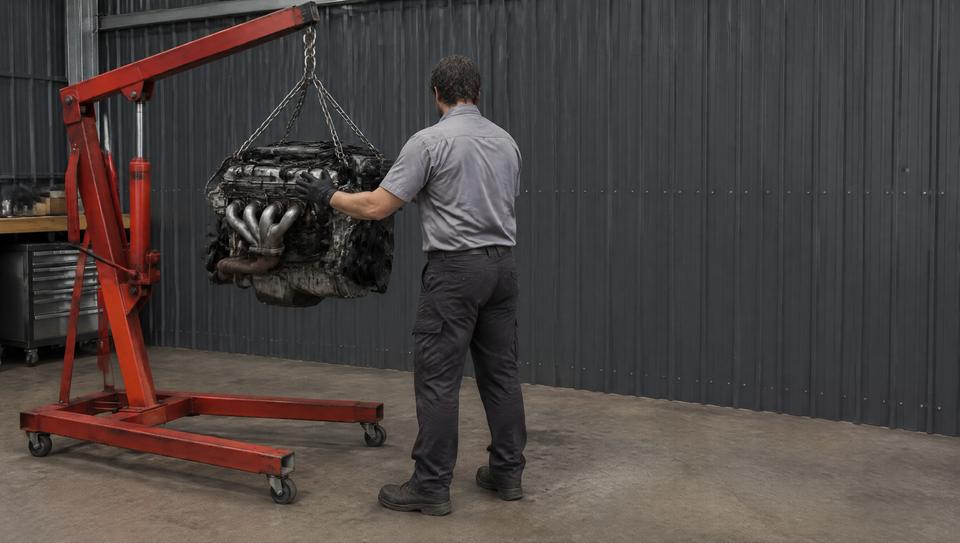
A rebuild means stripping the engine, measuring the worn parts, machining or replacing them, and putting it back together with new bearings, rings and gaskets. It's a big job, and the full picture often only shows once the engine is apart, so expect an estimate first and a firmer figure after the strip-down.
The other options are a reconditioned engine or a used one from a wrecked car, which is worth asking about for common Japanese models. Which makes sense comes down to the car's value and the state of everything else on it. On a job this size, Consumer Protection's advice applies: get it in writing, and get a second opinion if you're not sure a part needs replacing.
What the written quote should show
- The fault, and the test result that points to it.
- Each part by name, and whether it's new, reconditioned or used.
- Whether it's an estimate or a fixed quote. Once you accept a quote, the price can't rise unless you agree to more work or the job changes.
- How they'll contact you before doing anything extra that turns up.
- How long they expect to keep the car.
- The warranty on the work.
Your part, and the mechanic's
You can
- Check the oil level on a cold engine, parked on flat ground.
- With the engine off, look at the drive belt for cracks, fraying or a glazed shine.
- Record the noise on your phone and note when it happens: cold, hot, turning or accelerating.
- Ask for the old parts back once the job's done.
Leave to the mechanic
- Checking the belt tensioner and pulleys with the engine running.
- Compression and leak-down tests.
- Anything inside the engine, and any decision about a rebuild.
What we'd do
We'd pay for the diagnosis before paying for parts. A squealing belt takes a mechanic minutes to confirm. For anything inside the engine, we'd want the test results and a written quote in hand, and a second opinion before saying yes to a rebuild.