Red oil light while you're driving?
A red oil light means oil pressure is low, and an engine without pressure can wreck itself in minutes. Pull over somewhere safe and switch off. Don't keep driving to see if it goes out. Once the engine has cooled, check the level on the dipstick, and if it's low or you can't tell, have the car looked at where it is. If you've stopped on a busy road, wait away from the traffic, and call 111 if anyone is hurt or in danger.
What happens at an oil change?
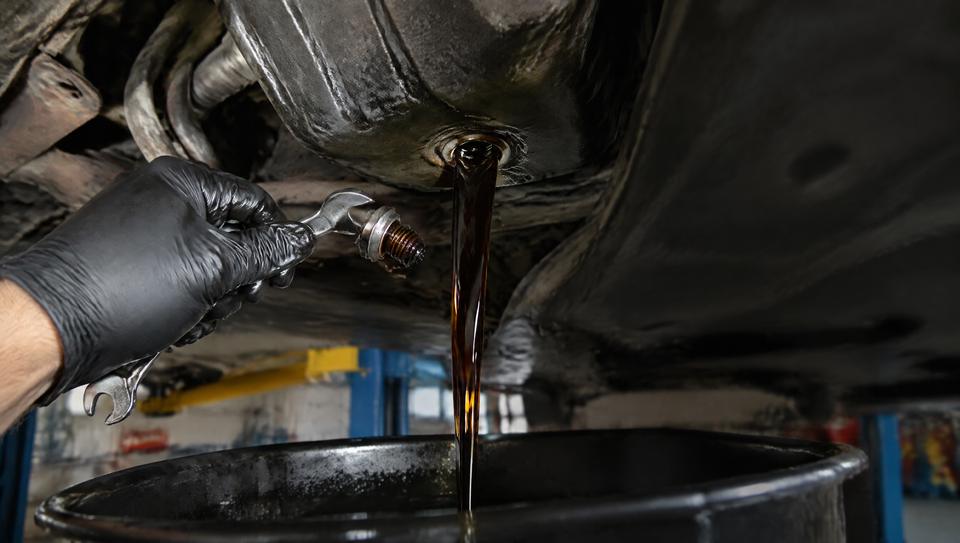
The mechanic drains the old oil from the sump (the pan under the engine), replaces the sump plug's washer if it needs one, and fits a new oil filter. Then the engine is filled with fresh oil to the right level and run briefly to check for leaks.
Most will reset the service reminder on the dash and put a sticker or note in the car showing when the next change is due. Ask for that if they don't offer.
How often should the oil be changed?
The maker's schedule sets two limits, kilometres and time, and the change is due at whichever comes first. Oil breaks down even in a car that hardly moves, which is why the time limit matters.
Many manuals also have a tougher schedule for hard use: lots of short trips, towing, dusty gravel roads or stop-start traffic. If that sounds like your driving, follow the shorter one. Cars with a service reminder on the dash count down for you, but it's worth knowing which schedule it's set to.
Which oil does my car need?
Two things matter: the grade and the specification. The grade is the thickness code, written something like 5W-30, and the manual lists the one the engine was designed for. The specification is a standard or a maker's approval code printed on the bottle, and many European engines need oil carrying their maker's approval.
Diesels fitted with a particulate filter usually need a low-ash oil, because ordinary oil can clog the filter over time. If the car is a Japanese import with a manual you can't read, the mechanic can look up the grade for that engine code.
What makes an oil change cost more or less
We don't list prices, but here's what moves them: how many litres the engine holds, whether it needs a fully synthetic or maker-approved oil, the type of filter, and whether an undertray has to come off first. A big diesel ute takes a lot more oil than a small petrol hatch.
Some garages bundle a basic check of tyres, lights and fluids with the oil change. Ask what's included so you can compare like with like.
Signs the oil needs attention before it's due
- The level drops noticeably between changes.
- Brown, black or amber drips where the car is parked. AA New Zealand says a modern car shouldn't leak any oil.
- Blue-grey smoke from the exhaust, especially on start-up.
- A creamy, milky film under the oil filler cap.
- The oil light flickers at idle or on corners.
What the quote for an oil change should show
- The oil grade and specification, matching the manual.
- How many litres are going in.
- The oil filter, and a new sump plug washer if the car uses one.
- That the old oil and filter are disposed of properly.
- The service reminder reset and the next change written down.
- A record in the service book or the digital history.
What you can do, and what's the mechanic's job
You can
- Check the oil on level ground with the engine cold or as the manual says, and wipe the dipstick before reading it.
- Top up with the grade in the manual if it's below the low mark, a little at a time.
- Keep a note of the kilometres at each change, and of any top-ups in between.
- Look for fresh drips under the engine where the car usually parks.
Leave to the mechanic
- Draining the oil and changing the filter. Hot oil burns, and working beneath a raised car needs a hoist or proper stands, not a jack.
- Disposing of the old oil, which must never go down a drain.
- Finding the cause of a leak, smoke or an oil level that keeps dropping.
What we'd do
We'd look up the grade and the schedule in the manual, then pick the shorter schedule if most trips are short or the car tows. Ask for the oil grade and the litres on the quote. If the level drops between changes, mention it in the note so the mechanic looks for the reason while the car's there.