Gauge climbing, or steam from under the bonnet?
Pull over somewhere safe and switch the engine off. AA New Zealand's advice is to stop driving straight away when an engine overheats. Keep the bonnet shut while steam is coming out, and never open the radiator or coolant cap on a hot engine: the coolant is under pressure and can scald. Wait off the road and away from traffic, ring your roadside cover, and call 111 if anyone is hurt.
How the cooling system works
A water pump pushes coolant through passages in the engine, where it picks up heat. The coolant then runs through the radiator at the front of the car, where air passing through the fins carries the heat away. A thermostat holds the engine at its working temperature, a pressure cap keeps the system sealed, and an electric fan pulls air through when the car is crawling.
Hybrids and EVs often have a second circuit for the battery and electronics. AA New Zealand says that coolant needs checking and replacing at regular service intervals too.
Signs the cooling system needs attention
- A bright green, orange, pink or blue puddle under the front of the car.
- A sweet smell after a drive, or wisps of steam from the engine bay.
- The level in the coolant reservoir dropping between checks.
- The temperature gauge sitting higher than usual in traffic or on long climbs.
- The heater blowing cold air once the engine is warm.
- White exhaust smoke or milky residue under the oil cap, which points towards the head gasket.
Radiator repair or a new radiator?
It depends on where the coolant is escaping. A split hose, a loose clamp or a weeping water pump are their own repairs, and the radiator may be fine. Many modern radiators are an aluminium core with plastic end tanks, and once the core is corroded or a tank has cracked, replacing the radiator is usually the sensible fix.
The mechanic finds the leak by pressurising the system with the engine cold and watching where coolant appears. On a slow leak that only shows when hot, they may need to run the engine up to temperature.
When does a coolant flush help?
Coolant wears out. Its corrosion protection fades with time, so the maker sets an interval for changing it, and AA New Zealand recommends replacing the coolant and the thermostat at service intervals.
A flush drains the old coolant, rinses the system and refills it with the type the maker specifies. It's the right job when the coolant is due or dirty. It won't stop a leak, and it won't fix a head gasket, so don't let anyone sell it as the cure for a car that's losing coolant.
What the written cooling quote should show
- The pressure test result and where the leak is.
- Each part being replaced: radiator, hoses, clamps, thermostat, cap or water pump.
- The coolant type the maker specifies, and how much.
- Bleeding the air out of the system and a test run up to temperature.
- A check for head gasket damage if the engine has already overheated.
Does the WoF look at the cooling system?
No. The cooling system isn't one of the WoF items, so a car can pass with a slow leak. Treat a fresh sticker as a pass on safety, not a clean bill of health for the radiator.
What you can safely do
You can
- Check the reservoir level against its marks, only with the engine cold.
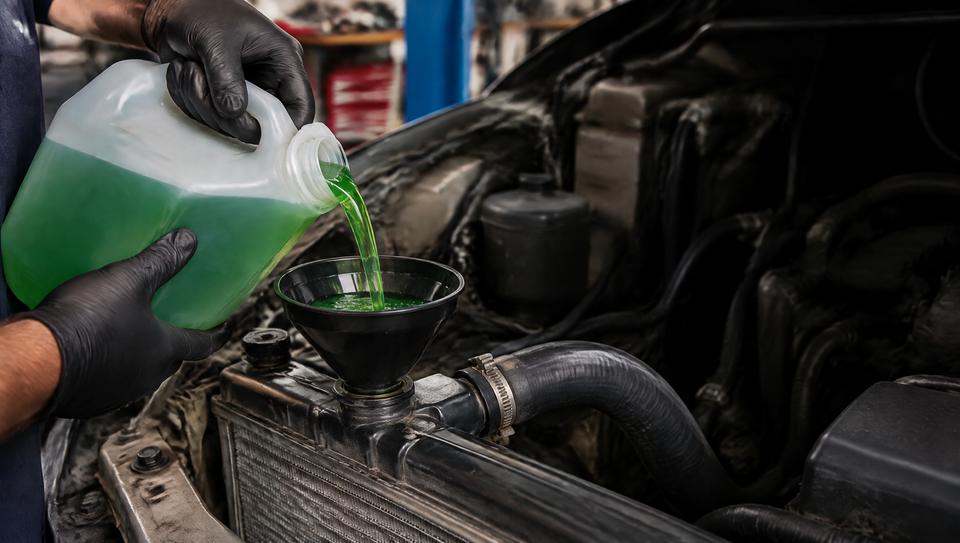
- Top up through the reservoir, cold engine only, with the coolant the handbook specifies.
- Look under the front for coloured drips after the car has been parked overnight.
- Watch the gauge in heavy traffic and on long hills.
Leave to the mechanic
- Pressure testing and tracking down the leak.
- Replacing the radiator, hoses, water pump or thermostat.
- Flushing, refilling and bleeding air from the system.
- Checking for head gasket damage after an overheat.
Where we'd begin
We'd find the leak before buying coolant by the bottle. Ask for a pressure test and a written quote that names the leaking part. If the engine has already overheated, get the head gasket checked before anything else is signed off.