Grinding, a wobble or a wheel that feels loose? Stop
A badly worn bearing can let the wheel move on its hub. If the hum turns to grinding, the steering goes vague, or the car pulls or wobbles, slow down, pull over somewhere safe and switch off. Have it seen where it is. If anyone is hurt or in danger, call 111.
Why does a wheel bearing hum?
Each wheel spins on a sealed bearing: rows of steel balls or rollers in a ring, packed with grease. When the seal lets in water or grit, or a hard knock from a pothole or kerb dents the surfaces they roll on, those surfaces roughen and start to hum.
Because it turns with the wheel, the noise follows road speed. That's what separates it from engine and gearbox noises.
Road speed or engine revs?
| Points to | Try this | |
|---|---|---|
| Rises with road speed, same in any gear | A wheel bearing or the tyres | Listen at a steady speed, then coast |
| Rises with engine revs, even parked | Engine, belts or alternator | Rev it gently in Park or neutral |
| Changes on gentle curves | A wheel bearing | Note which way makes it louder |
| Changes when you lift off or accelerate | Differential or gearbox bearings | Note whether it's on or off the power |
| Clicks on full lock | A CV joint | Listen in a car park, window down |
Three checks that narrow it down
Change the road surface
Tyre noise changes a lot between smooth tarseal and rough chip seal. Bearing noise changes much less.
Ease into gentle curves
On a straight, empty road at a steady speed, sway gently left and right. If the hum swells one way and fades the other, a bearing is very likely.
Note the speed
When it starts, and whether changing gear makes any difference. Put it in the note for the mechanic.
Could it just be the tyres?
Sometimes. Tyres worn into a saw-tooth pattern, or chunky all-terrain tyres on a ute, can hum just like a bearing. AA New Zealand also points out that low humming is often driveline related, from a worn differential or gearbox bearings. A mechanic can tell by spinning the wheel on a hoist and feeling for roughness and play, and by checking the tread. Worth knowing before you pay for a bearing.
What will the mechanic do?
Road-test the car, then lift it and check each wheel for play by rocking it top and bottom, and for roughness by spinning it. Some use a listening tool on each hub while the wheels turn.
Many cars now have the bearing built into a hub assembly that's replaced as a unit; others have a bearing pressed into the hub. Ask which yours has, and whether the ABS sensor comes with it, because that changes the quote.
What a good quote should say
- Which corner, and how the mechanic confirmed it.
- A hub assembly or a pressed-in bearing.
- Whether the ABS sensor or ring is included.
- A wheel alignment check if steering parts are disturbed.
- A road test after the job.
What you can do, and what's the mechanic's job
You can
- Note the speed and which way it gets louder.
- Check the tyres for uneven, saw-tooth wear.
- Turn the radio off and listen on different road surfaces.
Leave to the mechanic
- Lifting the car and checking each wheel for play and roughness.
- Pressing in bearings or fitting hub assemblies.
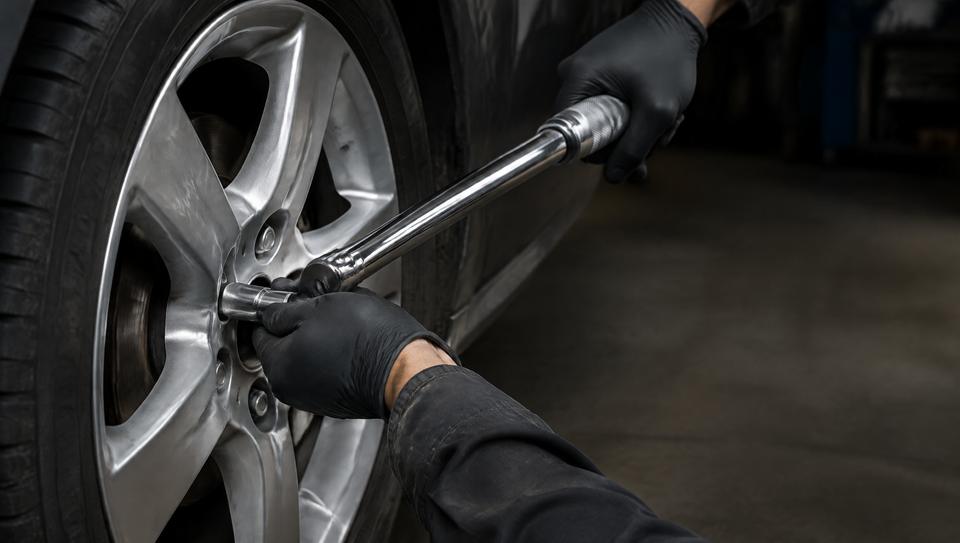
- Tightening the hub to the maker's figure.
What we'd do
We'd try the gentle-curve test on a quiet road, note which side it seems to be and the speed it starts, and send it as a suspension job this week. If it had started grinding, we'd have a mobile mechanic come to the car instead.